PuriBreeze Produce Cleaner Review: What OH-Ion Electrolysis Actually Removes
America's largest Cyclospora outbreak on record ended in September 2026 with 20,996 confirmed cases. It is also the clearest proof that a countertop device is not what stops an outbreak. Here is what PuriBreeze does do — and what no produce cleaner can.
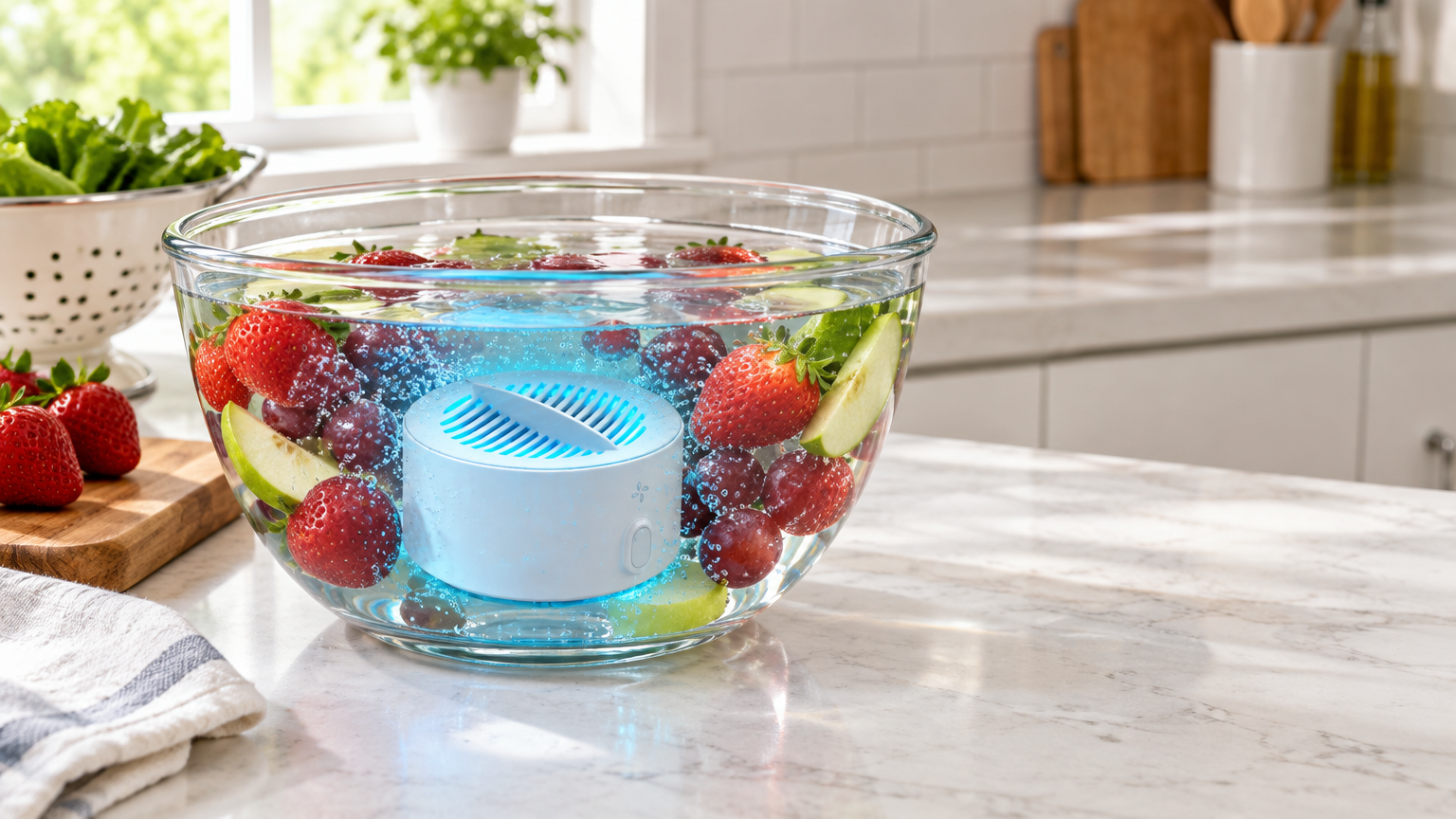
Searching for a PuriBreeze review usually means asking three things: does puribreeze work, is puribreeze a scam, and is it worth the money. This page answers them from documents rather than impressions. We used the seller's specifications and claims, checkout prices verified in US dollars, public CDC and FDA reporting on the 2026 outbreak, and public literature on electrolysis. We did not run laboratory tests on the unit, and we say so wherever a claim rests on the seller alone.
Quick facts
- Technology
- OH-ion electrolysis generating oxygen microbubbles
- Cycle
- About 5 minutes, one button
- Rating
- IPX7, fully submersible
- Power
- Cordless, rechargeable
- Claimed removal
- Up to 99% of pesticides and bacteria (seller's claim, no independent test published)
- Best realistic use
- Wax, grit and surface residue on produce eaten raw
- Not a substitute for
- Cooking, sourcing, or outbreak protection
- Price
- From US$79.99 per unit on the 4-pack; US$99.95 single
- Guarantee
- 30-day money-back (per seller)
- Payment
- Visa, Mastercard, Amex, Discover, PayPal, Apple Pay, Google Pay, Klarna
The chemistry, honestly
OH-ion electrolysis passes an electric current through water. That process produces hydroxyl radicals and other reactive oxygen species with real oxidizing power, along with oxygen microbubbles that can physically work into the small crevices of a leaf or skin and loosen debris. The mechanism is genuine and is used industrially in food processing and wastewater treatment.
What the marketing leaves out is that the effect depends on dose, time and organic load. A portable unit in a bowl of tap water does not hold a controlled concentration the way an industrial line does. Chemistry that works on a production line does not transfer automatically to a kitchen bowl.
What a 5-minute cycle can and cannot do
What it can do
- Lift visible dirt and grit
- Soften and strip the wax coating applied to apples and cucumbers
- Reduce surface pesticide residue (plausible mechanism, unquantified by any published test)
- Make a rinse more thorough than holding produce under a tap
- Give you a repeatable routine that takes no measuring
What it cannot do
- Kill Cyclospora — an oocyst that lives in tissue and on surfaces, delivered through a supply chain, not a wax you can wash off
- Guarantee 99% removal of anything (a seller's claim)
- Extend shelf life fivefold (no published basis)
- Replace cooking
- Substitute for sourcing and traceability
What it actually is
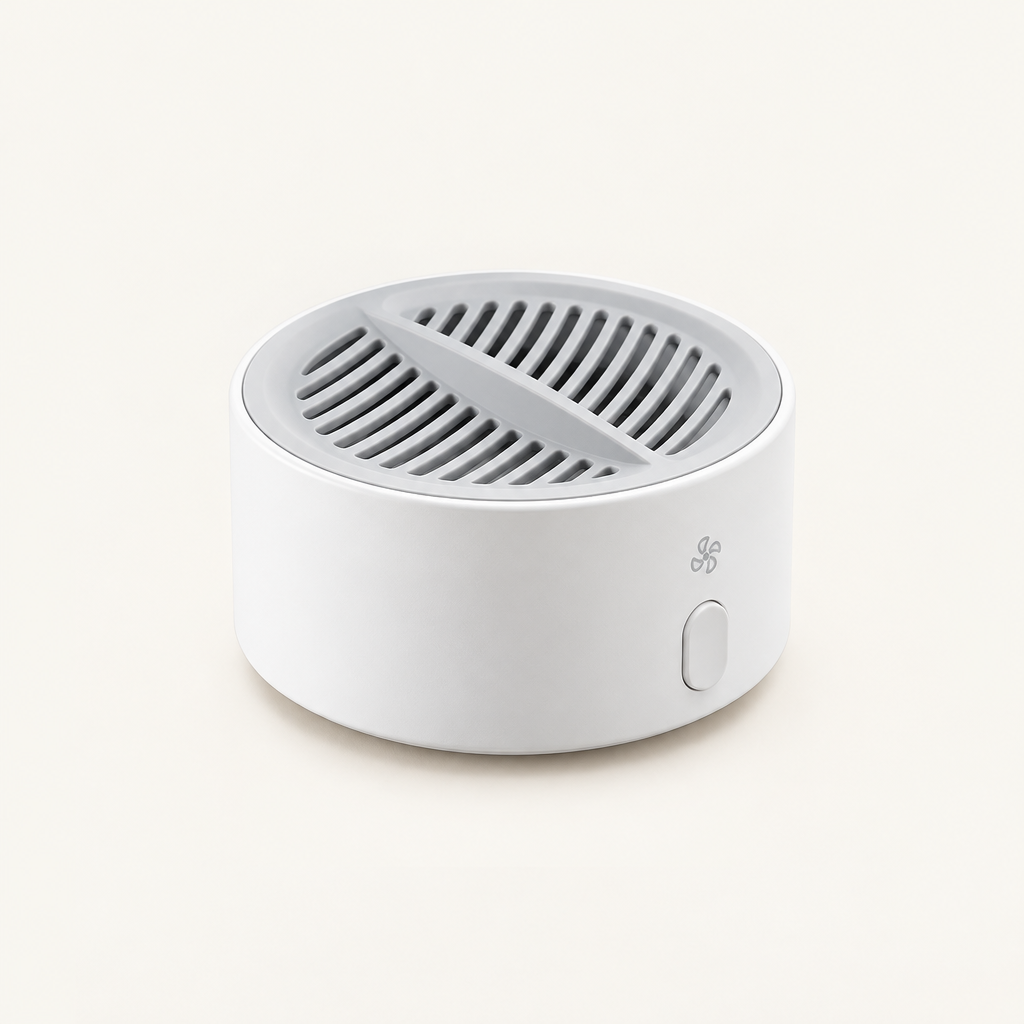
The PuriBreeze is a compact, low-profile puck — matte white, roughly the size of a large doughnut, and about as heavy as a full mug. The whole interface is one oval button on the side, under a small printed fan icon. There is no display, no app, no dial. The top is a circular grey grille divided by a cross bar, and that grille is where the light comes out when it is working. It is rated IPX7 and it runs cordless, so the entire cycle happens with the unit fully underwater.
Why the outbreak isn't the reason to buy
The facts come first. According to the CDC's October 2026 reporting, the outbreak produced 20,996 confirmed cases across 49 states and DC, with 1,161 hospitalizations and 2 deaths. The FDA traced the cluster to iceberg lettuce from Taylor Farms in Mexico, which was recalled on July 17, 2026; linked illnesses in the lot were estimated at roughly 12,000 to 12,883. Michigan recorded the largest number of cases. The CDC ended its tracking in September 2026 and the FDA closed its investigation. Reported cases for the year reached 33,368 by October 24, compared with 4,131 over the same period in 2025.
Real cost per use
The PuriBreeze is a one-time purchase with no consumables. At $99.95, the marginal cost of a cycle is a few cents of electricity. The table compares it with the two alternatives most households already use.
| Option | Upfront | Per wash | Over 2 years |
|---|---|---|---|
| PuriBreeze | $99.95 | ~$0.02 | ~$99.95 |
| Produce wash spray | $0 | ~$0.35 | ~$180 |
| Vinegar soak | $0 | ~$0.10 | ~$50 (plus the smell) |
Break-even against a produce spray lands around 30 washes — roughly two months of normal use.
The five-minute ritual
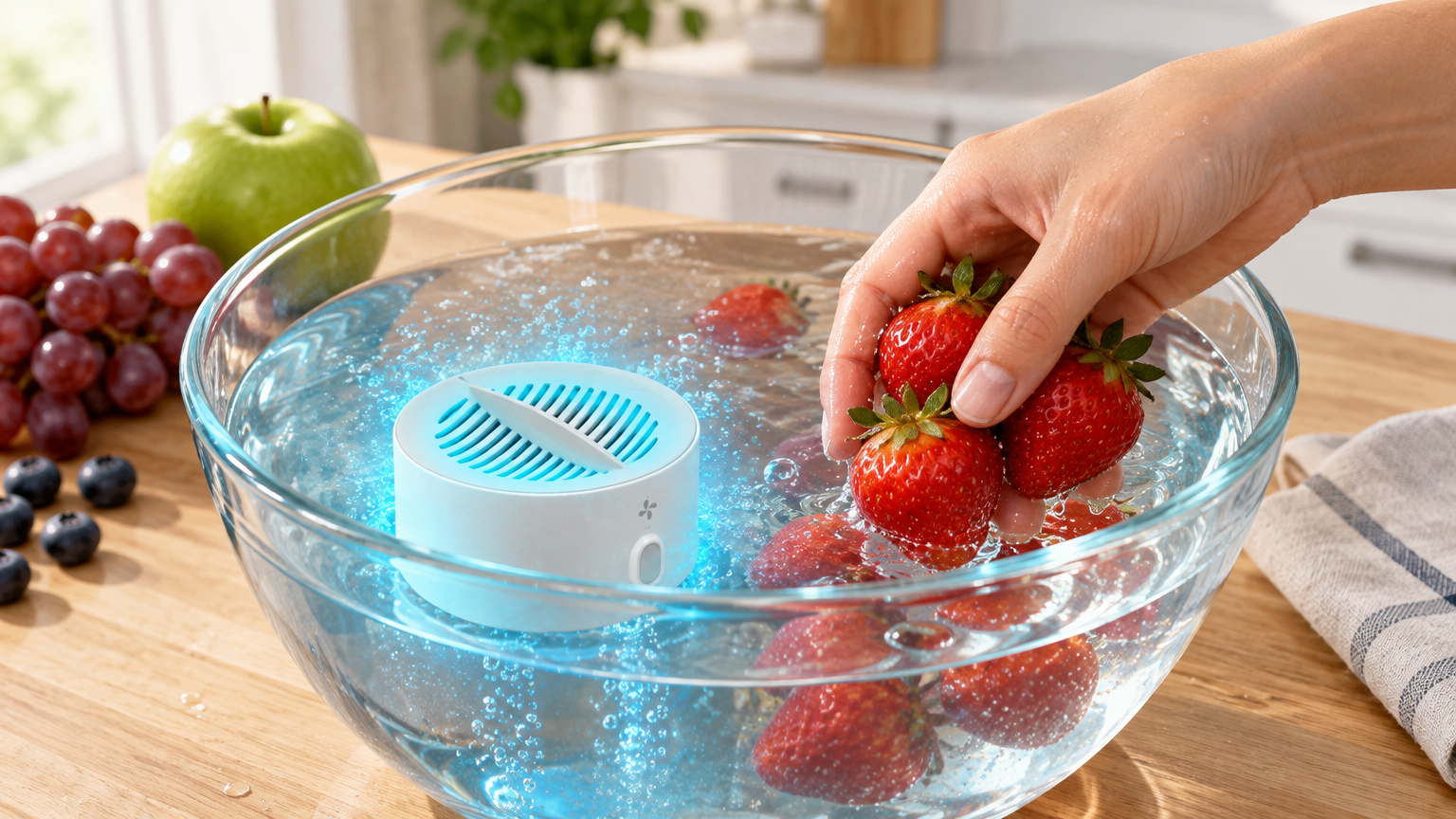
- Fill a bowl with water.
- Add the produce.
- Press the button and wait five minutes.
- Lift, rinse under the tap, and refrigerate.
Safety and the IPX7 claim
IPX7 means the unit is protected against immersion up to 1 metre for 30 minutes. It is a water-resistance classification, not a food-contact certification. Use potable water, discard the water after each cycle, and do not leave produce sitting in the bowl afterward.
Prices
Per-unit pricing as displayed at checkout. Shipping added at checkout.
One unit is enough for a household. Multi-packs only make sense for gifting or a second kitchen.
The 30-day promise
"Try PuriBreeze risk-free for 30 days. If you are not satisfied, return it for a full money-back refund." — seller's guarantee, as published
Thirty days is shorter than the 60 to 90 days typical in this category. Confirm in writing who pays return shipping before you order, and keep your packaging until you are sure you want to keep the unit.
Who it's for — and who it isn't
Pros
- Real electrolysis chemistry
- Cordless and fully submersible
- Five-minute, one-button routine
- Helps with wax and surface grit
- No consumables to rebuy
- IPX7 rating
Cons
- No independent test published
- "99%" is a seller claim
- Does nothing about Cyclospora or supply-chain risk
- "5x shelf life" is unsupported
- $100 is a lot for a rinse aid
Frequently asked questions
Answers reflect the seller's published claims unless marked as verified. Where no independent data exists, we say so.
What is PuriBreeze?
A cordless, fully submersible produce cleaner that uses OH-ion electrolysis to generate oxygen microbubbles in a bowl of water. It runs a cycle of about five minutes with one button.
How does OH-ion electrolysis work?
An electric current passes through water, producing hydroxyl radicals and other reactive oxygen species along with oxygen microbubbles that can lift debris from surfaces. The process is used industrially, but its effect depends on dose, time and organic load.
Does it remove 99% of pesticides?
99% is the seller's claim. No independent laboratory test of this specific model has been published, so the figure cannot be verified.
Does it kill bacteria like E. coli and Salmonella?
The seller claims it does. Effectiveness depends on concentration, contact time and water load, and no published independent test confirms the claim for this device.
Will it protect me from Cyclospora?
No. Cyclospora is carried inside and on produce through a supply chain. A countertop immersion device does not address that. Cooking and sourcing are the relevant controls.
How long does a cycle take?
About five minutes per cycle, started with a single button.
Does it need salt or additives?
No additives are required according to the seller's instructions. Use potable water and discard it after the cycle.
Is it waterproof?
It is rated IPX7, meaning protected against immersion up to 1 metre for 30 minutes. That is a water-ingress rating, not a food-contact certification.
Is it worth $100?
For most households one unit is enough. Whether a better daily rinse is worth about $100 to you is a personal call. It is not a substitute for cooking or sourcing.
How does the 30-day guarantee work?
According to the seller, you can return the device within 30 days for a money-back refund. Confirm in writing who pays return shipping before ordering.